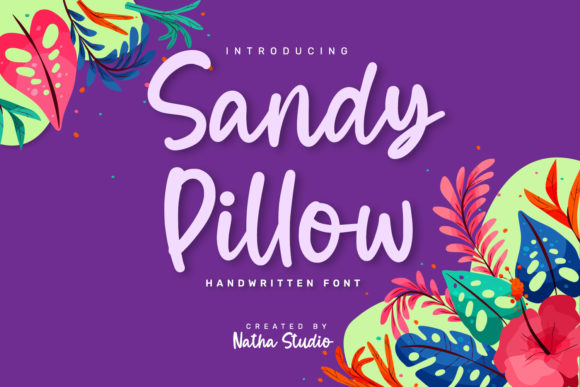
Sandy Pillow: A Handwritten Font for Creative Branding
There I was, staring at a blank brand board, trying to figure out how to make a new café’s identity feel warm and approachable. The client wanted something that felt personal, like the kind of coffee you’d get from a local spot with a friendly barista. That’s when I pulled up Sandy Pillow, a casual and adaptable handwritten font, and saw the potential right away.
What Is Sandy Pillow?
Sandy Pillow is a script font with a relaxed, natural flow. Each letter has a unique touch, making it feel more like a real hand-drawn typeface than a digital one. It’s not overly ornate, but it carries a sense of personality that can elevate any design. The subtle swashes and irregularities in the letters give it a handmade quality that feels authentic and inviting.
It’s part of the Script Amp collection, which focuses on expressive, creative typefaces. Sandy Pillow fits perfectly within that range, offering a versatile option for designers who want to add a human touch to their work.
Testing Sandy Pillow in Real Projects
I first tested Sandy Pillow on a logo concept for a small bakery. The font worked well as a headline, adding a friendly and approachable vibe. When paired with a simple sans serif for the tagline, it created a balanced contrast that felt modern yet personal.
On packaging mockups, Sandy Pillow added a charming element to product labels. It looked great on a cereal box or a tea bag, giving the brand a custom feel without being too flashy. In social media graphics, it stood out as a strong visual element, especially in Instagram posts and Facebook banners where bold, readable text is key.
For a business card, the font held up well at smaller sizes, though I found that using it for body text wasn’t ideal. It works best as a display or accent font, not for long paragraphs.
When to Use Sandy Pillow
Sandy Pillow shines as a display font. It’s perfect for logos, headlines, and short phrases that need a personal, artistic touch. It’s also great for branding projects that aim to feel more intimate or artisanal.
It pairs well with serif fonts for a classic look or with sans serifs for a more modern contrast. For example, using it alongside a clean, minimalist font can create a nice balance between warmth and professionalism.
It’s not the best choice for formal corporate branding or situations where clarity and readability are critical. If you’re designing for a law firm or a financial institution, you might want something more structured. But for creative studios, cafes, skincare brands, or handmade shops, it’s an excellent fit.
Design Considerations
One thing to keep in mind is that Sandy Pillow is a premium font, so it’s important to check the licensing before using it in client work. Make sure it’s suitable for commercial use, especially if you’re creating templates, merchandise, or print-on-demand products.
Before finalizing any project, test the font in different sizes and contexts. See how it looks on a shop sign, a product label, or a website header. Sometimes a font that looks great on a screen doesn’t translate well to print, and vice versa.
The font includes alternate characters, ligatures, and swashes, which can be useful for customizing the look. These features allow for more flexibility in design, helping you create a unique visual identity without sacrificing legibility.
Final Thoughts
Sandy Pillow is a font that brings a sense of warmth and individuality to any design. It’s not just another script font—it’s a tool for creating something that feels personal and meaningful. Whether you’re working on a logo, a packaging design, or a social media campaign, it offers a fresh, creative alternative to more rigid typefaces.
If you’re looking for a font that adds character without overwhelming the design, Sandy Pillow is worth considering. It’s adaptable, expressive, and perfect for brands that want to stand out with a little bit of handmade charm.